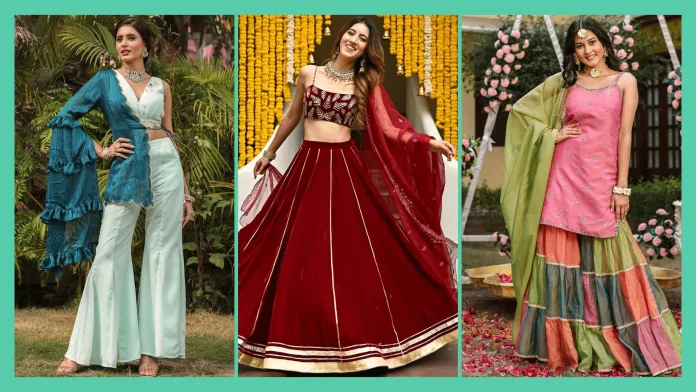

Indian weddings take place all year long and are colorful, lavish, and rich in cultural traditions. Your attire as a wedding guest reflects custom, celebration, and seasonality in addition to being a fashion statement. The season of the wedding as well as the function play a role in selecting the appropriate dress. In the summer, something that appears majestic in the winter may feel oppressive. In a similar vein, the richness of a rainy backdrop might overpower a breezy pastel.
This article provides you with wedding guest attire suggestions for the summer, monsoon, winter, and spring seasons in India. Here are some style suggestions that blend comfort, culture, and elegance, whether you’re going to a lavish North Indian festival or a simple South Indian wedding.
Weddings in the summer (March to June)
Particularly in the north and center, Indian summers are notorious for their intense heat and excessive humidity. Comfort is essential for summer weddings. Select breezy silhouettes, lighter hues, and breathable materials so you can enjoy the occasion without being too hot.
For females:
Fabrics Choose breathable, light materials such as organza, chiffon, georgette, cotton-silk blends, and mulmul. Steer clear of raw silk, brocade, and heavy velvet.
Colors: Adopt summer hues like ivory, peach, lilac, mint green, powder blue, baby pink, and lemon yellow. Pastels are useful and fashionable.
Ideas for Outfits:
A sleeveless blouse worn with a flowery organza saree is stylish, breezy, and joyous.
Anarkalis made of cotton with light mirror work are ideal for events held during the day.
Pastel-colored lehengas in the cape style for a reception or cocktail party in the evening.
For a Haldi or Mehendi event, Sharara sets with gota patti work are used.
Accessories: Don’t overdo them. Select tiny potli bags, light maang tikas, and pearl or silver jewelry. Steer clear of bulky necklaces or layered jhumkas that will cause skin irritation when heated.
Shoes: Strappy block heels, adorned juttis, or kolhapuris for comfort and ease of movement.
For Males:
Fabrics: Select kurtas made of light silk, cotton, or linen. Avoid wearing thick sherwanis or heavy bandhgalas to events throughout the day.
The best color combinations include beige, off-white, sky blue, mint, blush pink, and light grey.
Ideas for Outfits:
a set of kurta-pajamas made of linen with a Nehru jacket printed on them.
A casual Mehendi or Haldi outfit made of cotton Pathani.
a wedding ceremony kurti made of light silk with little embroidery.
A traditional and airy Lucknowi chikan kurta.
Accessories: Mojaris, pocket squares, and basic brooches finish the ensemble.
Monsoon Weddings (July to Sept.)
Weddings during the monsoon season are beautiful and revitalizing, but they also present a special set of difficulties. Imagine soggy soils, unexpected downpours, and fluctuating humidity. Looking beautiful without being heavy or soaked should be your aim.
For women, use lightweight, quick-drying materials like silk blends, chiffon, georgette, or crepe. Steer clear of lengthy trailing dupattas and elaborately layered ensembles.
Colors: In gloomy conditions, jewel tones such as ruby red, wine, royal blue, or emerald green shine out. Any water splashes are less noticeable with darker hues.
Ideas for Outfits:
A stylish yet weatherproof chiffon saree with an embellished blouse.
Dhoti pants and a short peplum kurti allow for effortless mobility.
A lehenga made of crepe with few decorations.
For cocktail evenings, a cape sari or fusion gown.
Accessories: Opt for jewelry that is lacquered or waterproof. Choose embroidered clutches over leather shoes and purses.
Wear only closed-toe shoes, juttis, or sandals with rubber soles. Steer clear of heels that sink in wet grass or stilettos.
For Men: Materials: For this season, lightweight materials like cotton-silk, terry-cotton, or synthetic mixes are ideal.
Colors: Vibrant hues like charcoal, burgundy, navy, and forest green look great.
Ideas for Outfits:
a patterned blazer with pants or a short kurta and churidar.
A monochromatic, minimally layered Indo-western outfit.
a lightweight stole and a crepe kurti with side slits.
Accessories: Very few metal pieces. Belts and mojaris made of fabric or waterproof.
Weddings in the winter (October to February)
In India, particularly in the north, winter is the most popular time of year for weddings. Guests can experiment with rich layering, elaborate embroidery, and opulent textiles because of the cold weather. You have the opportunity to go all out with your wedding attire.
For women, the following textiles provide warmth and grandeur: velvet, raw silk, brocade, pashmina, and heavy silks.
Colors: The warm atmosphere of winter is complemented with deep jewel tones such as maroon, navy blue, emerald, dark gold, wine, and magenta.
Ideas for Outfits:
A zardozi-embroidered velvet lehenga for an evening event.
A traditional and majestic banarasi silk saree paired with a full-sleeved blouse.
For a Sangeet or Reception, a floor-length Anarkali with a jacket or cloak.
Pashmina shawls add a sense of warmth and nobility when worn with suits.
Accessory items that enhance the richness include embroidered shawls, thick jhumkas, adorned handbags, and kundan or Polki jewelry.
Shoes: block heels with high traction, embroidered boots, or mojaris.
For Males:
materials: Heavy silks, velvet, jacquard, and wool-blend materials are the best options for remaining warm and fashionable.
Colors: Deep hues such as mustard, ink blue, bottle green, and oxblood. For formal events, you can even experiment with metallics or gold accents.
Ideas for Outfits:
a bandhgala sherwani, a brocade dupatta, and a churidar.
a silk kurta layered with a velvet Nehru jacket.
a tuxedo or three-piece suit for cocktail events or receptions.
For warmth and style, throw on a stole or shawl.
Accessories: Pocket squares, turbans, cufflinks, and statement brooches enhance the ensemble.
Shoes: Formal loafers, boots, or leather juttis.
Weddings in the spring (February–April)
Indian weddings are colorful and lighthearted throughout the spring, which is a season of passion and rebirth. The decor and apparel are dominated by floral themes, and the weather is pleasant.
For women: Materials: For ease and mobility, flowing materials like tissue, organza, chiffon, or soft silk work well.
Colors: Peach, coral, lavender, sky blue, sage green, and rose pink are examples of colors that are bright but still delicate. Embroidery and floral designs are quite popular.
Ideas for Outfits:
Fresh and fashionable is a flowery lehenga with a sheer dupatta.
a mirror-work blouse worn with a georgette saree.
cigarette pants with a tunic-style kurta for a Mehendi event.
A ruffled sari or a sari gown that has already been draped for evening gatherings and cocktails.
Accessories include meenakari earrings, embroidered clutches for evening wear, and floral jewelry for daytime occasions. Make sure your makeup is light and radiant.
Footwear options include wedges, pastel mojaris, and stylish mules.
For Men: Materials: Lightly embroidered jacquard, linen-silk, or combinations of soft cotton and silk are the best options.
Colors: For daytime events, lighter shades such as pink, beige, ivory, powder blue, and soft yellow work best.
Ideas for Outfits:
a pastel kurta with a flowery print Nehru jacket.
For the main ceremony, a beige bandhgala with pastel embellishments.
For a contemporary Indo-western style, use a linen jacket over a kurta set.
Accessories include cozy mojaris or loafers, pocket squares with flowers or prints, and tinted sunglasses.
General Advice for Every Season
Always keep the time of day in mind. Deeper hues and heavier materials are appropriate for evening celebrations, while lighter hues and materials are best for morning gatherings.
Consider the occasion: for Mehendi and Haldi, go for something fun and quirky; for the engagement or reception, go for something classy; and for the wedding, go for something classic.
Wear comfortable clothing that corresponds with the season. Your discomfort will show through your clothes, no matter how lovely it is.
When in doubt, opt for classic pieces with a contemporary touch, such as a kurta with a draped stole or a classic sari paired with a fashionable shirt.
Keep a rain-resistant bag for monsoon weddings and an additional jacket or shawl for winter occasions.
In conclusion
Indian wedding attire is a cultural and artistic experience. Since there are festivities all year long, dressing according to the season will guarantee that you look beautiful, feel comfortable, and get the most out of every event. There is an ideal style for any environment, mood, and tradition, ranging from delicate springtime flowers to majestic winter velvets. Dress carefully, dance freely, and celebrate love in style because fashion should enhance your presence rather than take away from the festivities.