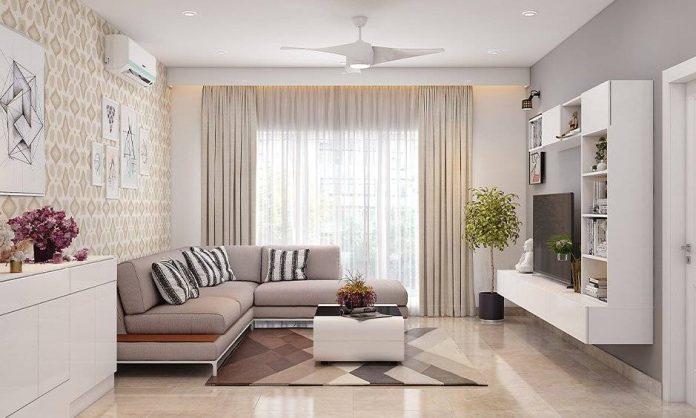

Details are more important than we often think when it comes to creating the illusion of extra space in a home. When we think of minimalist furniture, mirrors, or wall demolition, curtains are one element that has a surprisingly large impact. Curtains are more than just sheer cloths used for seclusion or to block out sunlight. They are visual statements that have the power to change a room’s perceived dimensions, ambiance, and subtle sense of size. One important factor in giving the impression of more space is the color of your drapes.
Selecting the ideal curtain colors to enlarge a space is more than just personal taste or sofa matching. It involves comprehending how continuity, contrast, and light combine to change your area. The correct hue can make corners less obvious, ceilings appear higher, and walls appear farther apart. Designers frequently employ this visual trick, which homeowners may readily implement with a little forethought and imagination.
First of all, when it comes to opening up a space, lighter hues typically have an inherent advantage. More light is reflected by whites, creams, beiges, and pastels, which helps a space feel larger and less cramped. Darker hues, on the other hand, absorb light and provide the impression of confinement, which can make spaces feel smaller yet cozier. Light-colored curtains are nearly always a secure and practical option if you want to enlarge a room. They lessen the fabric’s perceived weight, let natural light into the space, and illuminate gloomy areas.
White isn’t the only solution, though, and it’s also not the most intriguing one. With a little extra warmth or personality, off-white, ivory, and soft greys can accomplish anything white can. Using a soft beige or mild taupe curtain can provide depth without detracting from the sense of space in spaces that already have a lot of white—on the walls, ceilings, or furniture. While still remaining light, these hues provide a little more visual depth and texture.
Choosing a curtain color that closely resembles the color of the wall paint is another smart move. This helps to blur the lines between window and wall by producing a continuous appearance that permits unhindered eye movement. The space feels larger and more unified when there isn’t any sharp contrast. Using curtains in a slightly lighter or slightly darker shade of grey, for instance, can provide a feeling of harmony and space if your walls are painted a light grey. This method is particularly effective in smaller spaces when each visual component either enhances or detracts from the feeling of openness.
Cool blues, blush pinks, and mild greys are becoming more and more common in modern or minimalist homes. These hues are unique enough to offer a little personality while being subdued enough to maintain the space’s open atmosphere. Particularly cool-toned hues, such as mint green or icy blue, have a tendency to optically recede, making the walls appear farther away than they actually are. Without moving a single piece of furniture, this subtle psychological trick increases the sense of space.
Another element that complements curtain color is natural light. Sunlight-rich rooms can tolerate somewhat warmer or darker curtain tones without losing their sense of space. Conversely, very light and airy curtain colors work best in naturally dark or north-facing rooms. Soft-toned sheer or semi-sheer curtains can assist optimize natural light without sacrificing privacy. Sheers also produce a light, layered appearance that adds complexity without being cluttered and offers the appearance of depth.
In addition to color, the curtain’s fabric and finish can affect how spacious a room appears. Spaces tend to feel more open when they are covered with lightweight materials that flow freely and let some light in, such cotton blends, linen, or voile. Although thick, heavy drapes might provide an impression of luxury, they sometimes overpower small spaces and distort windows. Less is more in terms of color and weight when attempting to create the illusion of more space.
A delicate pattern in a light hue can occasionally improve a space without enclosing it. For instance, vertical stripes might provide the impression of greater ceilings by drawing the eye upward. Character can be added without visibly overcrowding the space with delicate blooms in light hues or soft geometric motifs. The secret is to avoid overpowering, high-saturation designs that take over the room and to maintain minimal contrast.
Sand, oatmeal, and light taupe are examples of neutral earth tones that work well for expanding a room’s appearance without sacrificing its coziness. These hues provide the best of both worlds by bridging the gap between deep color and stark white. They provide a grounded, organic touch that is calming and inviting yet reflecting enough light to keep things open. Earthy hues work particularly well in dining rooms, living rooms, and bedrooms where space and comfort are top concerns.
Curtains can be used as strategic instruments to manipulate vision in cramped urban apartments where every inch counts. The eye is drawn higher and the ceiling appears taller when floor-to-ceiling drapes are used in a light color that matches the wall. Extending the curtain rod above and beyond the frame gives the impression that the window is higher and broader, even if it isn’t. In confined settings, this easy trick is incredibly effective.
Subtly incorporating reflecting or eye-catching materials into the curtain design is another neglected technique. Lightweight polyester or silk blends are examples of fabrics with a subtle shine that can work wonders with sunlight to provide a delicate glow that accentuates openness and brightness. A faint sheen reflects light while matte textiles absorb it, softly lighting the space. But moderation is essential. A soft finish is preferable to a dazzling one because too much shine can appear fake or overdone.
Additionally, color psychology is involved. For example, light blues and greens evoke mental associations with the sky, water, and serenity and are frequently linked to nature and open landscapes. These connections might provide the impression that your space is not only bigger but also calmer. Although less popular, pale lavender or lilac can have a similar effect, providing equal parts peace and spaciousness.
There are ingenious methods to maintain the sensation of space even in spaces with more striking color schemes. Pale drapes and darker furnishings can create contrast without sacrificing openness. Alternatively, if the walls are painted in deeper hues, using lighter-toned drapes from the same color family can provide brightness and coherence.
In the end, how your walls, furniture, natural light, and overall style interact will determine the ideal curtain color to enlarge your house. However, the overall guideline is still the same: dark, heavy, and strongly contrasting curtains make a space feel more restricted, whereas light, neutral, and cool-toned curtains tend to open it up. By gently altering the room’s energy and spatial movement, the ideal curtain does more than simply hang in the background; it becomes an integral part of the narrative.
Making our living spaces feel as open and breezy as possible is more than just a design decision as they become increasingly multipurpose, acting as dining areas, home offices, exercise facilities, and personal retreats. It’s about clarity, serenity, and comfort. Selecting the appropriate curtain color can sometimes be all that is needed to replicate that atmosphere at home.
Therefore, take a moment to examine your windows before grabbing for remodeling supplies or furniture catalogs. Simply drawing the appropriate curtains across the frame could be the answer to a larger living area.