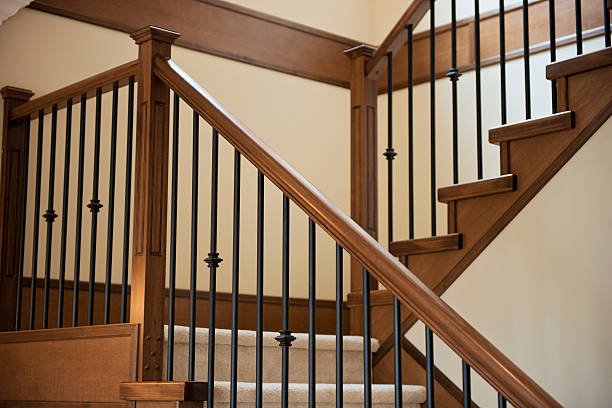

A wood stair handrail is both a functional component and a prominent architectural detail. Its profile, wood species, finish, length, and connection points affect the appearance and installation of the entire railing system. Flooring dealers, stair installers, contractors, architects, and interior designers should therefore specify the handrail alongside the balusters, newel posts, fittings, stair treads, and surrounding flooring.
Start with the Overall Staircase Style
Handrails are available in profiles ranging from traditional rounded shapes to clean contemporary and modern forms. The profile should relate to the broader interior rather than being selected as an isolated component.
Traditional profiles tend to complement detailed newel posts, turned wood balusters, decorative moulding, and classic hardwood flooring. Contemporary profiles generally feature simpler shapes that work with square posts, metal balusters, and interiors with restrained detailing.
When reviewing profile options, consider:
- The architectural style of the property
- The size and shape of the newel posts
- Whether the design uses wood or iron balusters
- The profile of nearby moulding and trim
- The appearance of the stair treads and risers
- How the rail feels when grasped
A visually attractive profile may not work with the selected fittings or baluster system. Compatibility should be confirmed before the design receives final approval.
Understand Plowed and Non-Plowed Handrails
A plowed handrail has a channel routed into its underside. This channel is commonly used to receive square-top wood balusters. Fillet pieces are installed between the balusters to cover the remaining portions of the channel.
A non-plowed handrail does not contain this channel. It may be used with pin-top wood balusters, certain iron baluster systems, or railing designs that do not require square balusters to sit inside the rail.
Before choosing between the two options, verify:
- The size and shape of the baluster top
- How each baluster will connect to the handrail
- Whether fillet material is required
- The width of the required plow
- Whether the installation uses wood or iron balusters
- Whether the handrail profile is available in the needed configuration
Ordering the wrong plow width can prevent the balusters from fitting correctly and may require replacement material.
Coordinate the Rail with Matching Fittings
Handrail fittings allow the rail to change direction, connect to newel posts, or form transitions at the top and bottom of the staircase. Common fittings may include easings, goosenecks, quarter turns, level turns, volutes, and start fittings.
These pieces must match the selected handrail profile. A fitting made for one profile may not align with the shape or dimensions of another.
The project team should identify:
- Where the rail begins and ends
- Changes in stair pitch
- Connections between sloped and level railing
- Turns at landings
- Wall-mounted rail sections
- Connections to newel posts
- Any decorative starting features
A marked staircase drawing can help the supplier and installer review each transition before materials are ordered.
Choose the Wood Species Carefully
The handrail frequently sits close to the treads and flooring, making species and color coordination important. Red oak, white oak, maple, and other hardwoods differ in grain, natural color, and response to stain.
The handrail does not always need to match every nearby wood component exactly. A contrasting rail can support the design when the difference is intentional. However, an unintended mismatch may make the railing appear disconnected from the staircase.
When selecting a species, compare:
- Grain pattern
- Natural undertones
- Stain absorption
- Available stair parts and fittings
- Surrounding flooring
- Newel posts and balusters
- Client expectations for color variation
Physical samples should be reviewed under the property’s lighting whenever the finish must coordinate with existing flooring or cabinetry.
Measure the Complete Rail Run
Ordering rail based only on the visible length of the staircase may result in insufficient material. The installer must account for cuts, fittings, transitions, and connections at each end.
Measurements should include:
- Sloped rail length
- Level rail length
- Landing sections
- Wall rail sections
- Cutting allowance
- Newel post locations
- Fitting dimensions
- Curved sections
- Delivery and access restrictions
Long handrail sections may also create handling and transportation concerns. Confirm that the selected lengths can pass through doors, hallways, stairwells, and other access points at the property.
Determine Whether Bending Rail Is Required
Straight handrail is appropriate for standard stair runs and level railing sections. Curved staircases, balconies, and rounded landings may require bending rail.
Bending rail is formed from several pieces that can follow a specified curve before being secured together. Its profile should match the straight rail and fittings used throughout the rest of the railing system.
For curved applications, document:
- Inside and outside radius
- Total curved length
- Stair pitch
- Required rail profile
- Connection points
- Template or drawing requirements
- Installation and clamping needs
Curved work should be planned before construction begins because the framing, baluster placement, and handrail must follow the same geometry.
Review the Full Railing System Before Ordering
A handrail should not be ordered until the connected parts have been checked as one system. A final review can identify incompatible profiles, missing fittings, incorrect lengths, or finish discrepancies.
Confirm the following details:
- Handrail profile
- Plowed or non-plowed configuration
- Plow width
- Wood species
- Finish color and sheen
- Straight and bending rail requirements
- Rail lengths
- Matching fittings
- Baluster type and size
- Newel post locations
- Installation hardware
- Delivery schedule
Careful specification helps create a railing system that looks consistent and arrives ready for installation. Trade professionals planning a new staircase or remodeling project can visit Wood Stair Co to review wood handrails, fittings, balusters, newel posts, stair treads, and other coordinated stair components.