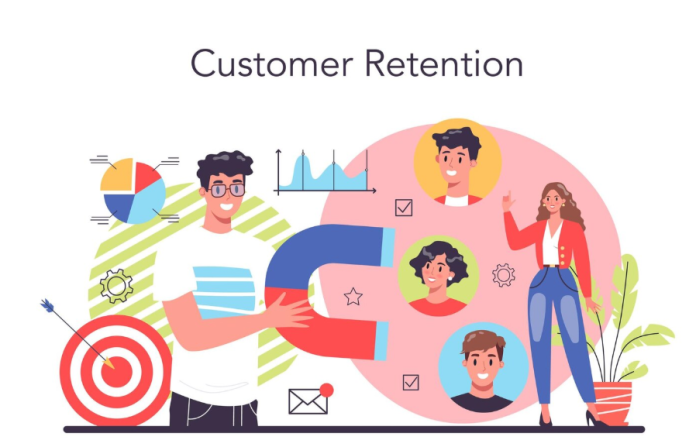

The silent engine of any long-term company is customer retention. Long-term profitability comes in retaining your current clientele, even if most marketing initiatives focus on gaining new ones. Maintaining current relationships is significantly less expensive than continuously looking for new ones. In addition to coming back, loyal customers also suggest businesses, overlook minor inaccuracies, and frequently increase their spending over time. Building trust, providing continuous value, and helping people feel seen, understood, and valued are more important than using short cuts to increase customer retention.
Retaining customers is fundamentally about building relationships. Loyalty increases with communication, concern, and dependability, just like in any other human relationship. Companies that grasp this idea change their focus from selling to serving. They consider the full customer journey, from the initial impression to after-sale care, rather than just the initial transaction. Every interaction turns into a chance to strengthen the bond, address an issue, or go above and beyond.
Keeping your word is the first step to retention. Although it seems easy, this is where a lot of businesses fail. Customers are investing trust when they select your product or service. That trust rapidly erodes if customers don’t get what they were promised, whether it’s in terms of quality, timing, or result. Unfulfilled expectations accumulate over time and finally cause churn. On the other hand, companies build trust when they continuously deliver on their promises, or even better, because loyalty is built on credibility.
Clarity in communication must be combined with consistency in delivery. Consumers like to feel knowledgeable and in charge. When it comes to an order status, service update, or policy change, they don’t want to be in the dark. Even when the news isn’t good, companies that communicate proactively show respect. Being open and honest with consumers about any delays, errors, or changes to plans fosters empathy rather than annoyance. A sense of cooperation is established via consistent, open communication. Customers are told, “We value you enough to keep you informed.”
Establishing an emotional bond is an additional layer of retention. Where they feel appreciated, people remain. Although discounts and awards have their place, human touches are more often the source of that sensation. Recalling a client’s name, preferences, or past issues demonstrates that you are not handling them like another system ticket. Small actions can make a big difference, such as sending a thank-you email after a purchase, a birthday note, or a follow-up email to inquire about the progress of a product. Transactional moments become opportunities to develop relationships when there is an emotional connection.
Talking is vital, but so is listening. Companies tend to concentrate on what they want to say, but if you’re prepared to listen, customers are full of helpful cues. Even when it’s critical, feedback is invaluable. A dissatisfied customer is still involved enough to give a damn. They’re offering you an opportunity to put things right. A little issue can easily become a lost client if criticism is ignored or, worse, if bad experiences are justified. However, responding to criticism, resolving issues, and expressing gratitude for recommendations demonstrates to clients that their opinions matter to the company. Deep loyalty is fostered by that kind of commitment.
Onboarding is a retention strategy that is frequently disregarded. The time immediately following a customer’s purchase is quite important. Their level of enthusiasm is at its peak, yet uncertainty or bewilderment may also seep in. Customers are guaranteed to feel secure in their choice if the onboarding process is seamless and encouraging. Assisting clients in understanding how to maximize value at the outset generates momentum, regardless of whether you’re selling software, coaching services, or tangible things. It raises the likelihood of long-term involvement and lessens buyer’s regret. It’s remarkable how effective a simple instructional, welcome email, check-in, or guide can be.
Support is also essential for retention. Customers are unlikely to come back if they experience difficulties and feel abandoned. However, they are more likely to become devoted advocates if they receive prompt, amiable, and efficient assistance. Excellent help is proactive rather than merely reactive. It foresees typical problems and fixes them before they get out of hand. Making the customer feel taken care of during their journey is more important than merely solving issues. Trust develops when your network of support feels more like a safety net than a barrier.
Retention can also be aided by loyalty schemes, but they need careful planning. Many companies believe that merely providing rewards or discounts will keep clients coming back, but loyalty is something that must be earned. Programs that seem satisfying and personal beyond the purchase are the most successful. Personalized offers, early product releases, and exclusive access can all increase engagement. Rewarding involvement as well as spending is crucial. People will feel like they belong rather than just like they are being marketed to if you celebrate anniversaries, promote customer tales, or foster a feeling of community around your business.
Enhancing customer retention can be greatly aided by technology. You can monitor behavior, spot trends, and interact at the ideal moment if you have the correct tools. You may remain connected without being obtrusive thanks to automation. A polite email check-in or a reminder about unused credits, for instance, can pique a customer’s interest if they haven’t connected in a long time. Data can also be used to better time recommendations, tailor them, and deal with problems before they cause churn. Customers are more inclined to stick with you if they feel like you “get” them.
Nevertheless, the human touch should never be replaced by technology. Even while automation makes it easier to expand your efforts, human interaction frequently has the greatest impact. A handwritten note in a package, a call to express gratitude to a long-time customer, or a sincere answer to a customer’s question are the things that people remember and discuss. Genuine human connection is a difference in a world where algorithms are taking over more and more.
Retention is also influenced by pricing and value, but being the cheapest isn’t always the goal. If customers believe they are receiving value, they will pay more. Quality, service, speed, convenience, or even consistency with their ideals can all be examples of that value. Customers are more likely to stay loyal to brands that deliver on their value proposition and communicate clearly than to those who compete solely on price. Customers remain loyal to a brand when they feel they are getting more than they are paying for or that the company is aware of their demands.
Addressing the root causes of churn head-on is another way to increase client retention. Ask customers why they are leaving rather than speculating. Simple discussions, follow-up emails, or exit surveys can yield unexpected information. Perhaps your user interface is unclear. Perhaps the billing procedure isn’t clear. Or perhaps clients simply didn’t feel heard. Whatever the cause, being aware of it enables you to become better. More significantly, it demonstrates to clients your dedication to education and development, which fosters trust even when a partnership is over.
Customer retention is more indirectly yet significantly influenced by company culture and employee engagement. Excellent service is more likely to be provided by contented, empowered staff. In every encounter, they speak for your company. A pleasant customer experience is a natural result of team members who are well-trained, treated, and in line with your company’s values. One of the best strategies to keep external clients is to invest in your own employees. Employees are, after all, frequently the initial point of contact for your brand.
Customer retention is ultimately a concept rather than a particular tactic. It’s about realizing that every encounter with a customer is an opportunity to strengthen trust. It all comes down to having the concern to follow up, to mend what’s broken, and to recognize and appreciate what’s working. Companies that put retention first not only expand, but flourish. They generate devoted followings, steady income, and effective word-of-mouth. And that kind of dedication is invaluable in a time when there are countless options.
Enhancing customer retention is a continuous process. The rhythm of listening, serving, growing, and connecting is a continuous commitment. However, learning this pattern is worthwhile because doing so results in more than just improved business numbers. Building enduring relationships is what transforms a company into a brand and a client into an advocate.