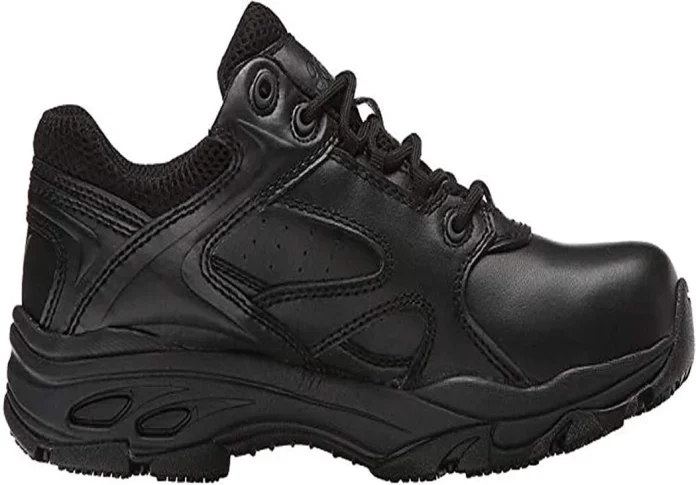

Few footwear styles balance professional appearance and everyday practicality as well as Men’s Oxford Shoes. Their structured design works with suits and office clothing, while work-focused versions may also provide the cushioning, traction, and support needed for uniforms, long shifts, and demanding professional settings.
What Defines an Oxford Shoe?
The Oxford is recognised primarily by its closed-lacing system. The sections of leather that hold the eyelets are stitched beneath the front portion of the shoe, creating a neat and closely fitted appearance.
This construction differs from the open-lacing design found on Derby shoes. Oxfords generally look more formal, making them a common choice for business clothing, ceremonies, uniforms, and occasions where a polished appearance matters.
Not every Oxford is designed solely for formal wear. Modern versions may include padded collars, cushioned footbeds, slip-resistant outsoles, safety toes, and other practical features. These additions allow the traditional silhouette to serve workers who spend much of the day standing or walking.
Where Can Men Wear Oxford Shoes?
Traditional black or brown leather Oxfords pair naturally with suits, dress trousers, and formal clothing. They are suitable for weddings, business meetings, interviews, dinners, and professional events.
More practical versions are worn in workplaces where employees need to maintain a uniform appearance while remaining comfortable throughout a shift. This can include military, police, security, hospitality, transport, administrative, and customer-facing roles.
The setting should guide the choice. A lightweight leather Oxford may be suitable for an office, while a worker exposed to wet floors or outdoor surfaces may need stronger traction and greater resistance to wear.
A shoe’s appearance matters, but it should not be selected without considering how and where it will be used.
Choosing the Right Upper Material
Leather remains a popular material for Oxford shoes because it offers a traditional appearance and can gradually conform to the shape of the foot.
Full-grain leather retains much of the hide’s natural surface. With proper care, it can develop character over time. Corrected or polished leather has a more uniform finish and may be easier to maintain for people who need their footwear to look consistent each day.
Synthetic uppers can provide a lower-maintenance alternative. They may be useful in settings where shoes are exposed to frequent dirt, moisture, or cleaning. However, breathability, flexibility, and long-term wear can vary between materials.
Before purchasing, consider how often the shoes will be worn, whether they will be used indoors or outdoors, and how much maintenance the wearer is prepared to perform.
Fit and Width Are Essential
Even a well-made shoe can become uncomfortable when the size or width is wrong. Oxford shoes should hold the heel securely without excessive slipping, but they should not press tightly against the toes or sides of the foot.
There should be enough room for the toes to move naturally. Pinching around the forefoot may indicate that a wider size is needed rather than a longer shoe.
Width is particularly important because Oxford lacing provides less expansion than many open-laced styles. Men with narrow, wide, or extra-wide feet should look for footwear offered in more than one width instead of trying to compensate by changing the length.
Try shoes with the type of socks that will normally be worn. Feet may also swell slightly later in the day, so checking the fit in the afternoon can provide a more realistic impression.
Features for Long Workdays
Professionals who spend long hours standing or walking should look beyond the appearance of the upper. The internal construction and outsole can have a major effect on comfort.
A cushioned footbed may reduce pressure during long shifts, while arch support can help the foot remain stable. Removable insoles are useful for people who use orthotic inserts or want to replace worn cushioning.
Slip-resistant outsoles may be valuable in hospitality, transport, healthcare, security, and other workplaces where smooth or damp floors are common. Buyers should check the product information carefully because a textured outsole is not automatically rated as slip resistant.
Some roles require protective footwear. A safety-toe Oxford can maintain a professional appearance while providing added toe protection, but the shoe should meet the requirements established by the employer or worksite.
Breathable linings, padded collars, and moisture-managing materials may also make extended wear more comfortable.
Selecting the Right Colour and Design
Black is the most formal and widely used Oxford colour. It works well with black, charcoal, and navy clothing and is often required for uniforms.
Brown Oxfords can feel slightly less formal and pair well with navy, grey, tan, and earth-toned clothing. Dark brown usually works in more professional settings, while lighter shades suit business-casual outfits.
Plain-toe Oxfords have a clean, understated front. Cap-toe versions feature an additional seam across the toe and are common in business and formal wardrobes.
Workers who follow a dress code should confirm requirements for colour, finish, toe design, sole colour, and permitted branding before ordering.
How to Care for Oxford Shoes
Regular care helps leather shoes maintain their appearance and shape. Remove loose dust with a soft brush or cloth after wearing them. Apply a suitable conditioner occasionally to prevent the leather from becoming dry, then use a polish that matches the shoe colour.
Wet shoes should be allowed to dry naturally away from direct heat. Radiators, heaters, and hair dryers can cause leather to stiffen or crack. Shoe trees or loosely packed paper can help absorb moisture and maintain the shape while drying.
Rotating between two pairs gives each pair time to air out between uses. This is especially helpful for people who wear formal or uniform shoes every working day.
Outsoles, stitching, laces, and heels should be checked periodically. Replacing worn parts before they fail completely can extend the usable life of the footwear.
The right Oxford shoe combines an appropriate fit, a professional appearance, and features suited to the wearer’s daily environment. Visit BootsPlusMore to compare men’s Oxford styles, available widths, work-ready features, and footwear options for professional and uniformed roles.