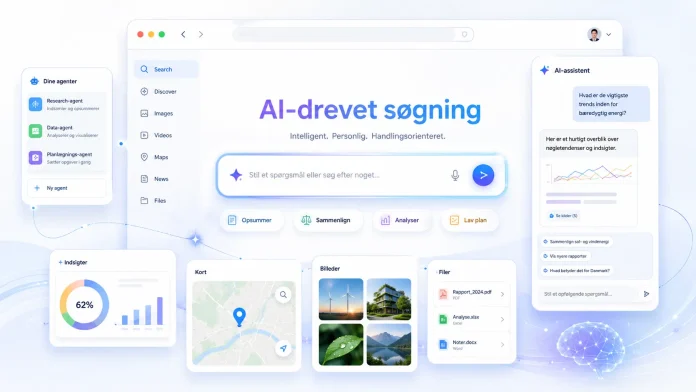

AI-powered search should influence backlink targeting by shifting attention from isolated ranking signals to complete information journeys. Search systems can now interpret complex questions, combine information from several sources and suggest follow-up paths. A useful backlink therefore needs to do more than point at a keyword-focused page; it should connect a credible publication, a clear topic and a destination that can satisfy a deeper need.
The change does not make traditional selection criteria obsolete. It makes them more demanding. Companies that compare backlink prices should still review authority indicators and cost, but those figures need to be weighed against topical relevance, audience quality, editorial treatment and the usefulness of the landing page. The cheapest placement is expensive if it creates no meaningful connection, and the highest-scoring domain is weak if its readers have no reason to care.
AI search expands the shape of a query
A conventional search may be expressed in two or three words, while an AI-assisted query can include a goal, market, limitation and request for comparison. The system may break that question into several subtopics before presenting a response. This increases the value of content that covers a subject clearly and shows how concepts relate.
Backlink targeting should reflect that broader structure. Instead of acquiring ten articles around the same exact phrase, a company can build references around the real decisions surrounding its service. A cybersecurity provider, for example, may need credible coverage of risk assessment, staff training, incident response, regulation and procurement rather than repeated generic articles about “best cybersecurity”.
Start with the destination and its information gap
The most useful targeting brief begins with the page that needs support. Identify its primary question, intended audience and role in the customer journey. Then review what information is missing or difficult to verify. A backlink cannot compensate for a page that is vague, technically inaccessible or disconnected from the rest of the website.
Strengthen the destination with direct answers, relevant examples, ownership information and clear boundaries. Explain who the service is for, where it is available and what a visitor should do next. When claims depend on data, name the source and date. This preparation makes the page more useful after a referral and easier for search systems to interpret in context.
Target subject neighbourhoods, not just keywords
Topical relevance exists at several levels. The publisher may cover the same industry, the article may address an adjacent problem, and the linked paragraph may introduce the exact issue solved by the destination. All three levels matter, although they do not need to repeat identical wording.
Subject neighbourhoods create natural variety. An accounting platform might earn links from small-business publications, ecommerce resources, finance sites and technology media, provided each article has a credible angle. The resulting profile reflects how the product is actually used instead of manufacturing dozens of mechanically similar references.
Choose publishers that contribute evidence
AI-powered answers benefit from information that is specific enough to be verified and reused. Publishers with named authors, clear editorial oversight and established subject coverage provide a stronger environment for that information than sites built mainly to host outbound links. Original reporting, expert interviews, transparent comparisons and well-maintained guides can all provide evidence that deserves to be referenced.
Review recent pages rather than relying on a homepage impression. Check whether articles are indexed, internally linked and written for a recognisable audience. Look for abrupt changes in subject, copied material, anonymous ownership and large volumes of near-identical commercial content. Third-party authority scores can narrow the field, but manual evaluation should make the final decision.
Map links to different stages of discovery
Not every backlink should lead to a sales page. Early-stage coverage may point to a definition, research asset or practical guide. Consideration-stage articles can link to a comparison, case study or methodology page, while a commercial story may justify a service or category destination. This distribution helps readers take the next logical step.
It also gives search systems a clearer picture of the site’s information architecture. External links introduce useful entry points, and internal links carry readers into related material. Sending every placement to the homepage wastes opportunities to strengthen specific topic clusters and can make a campaign look formulaic.
Treat anchors and surrounding text as one unit
Anchor text is a concise label, not a complete optimisation strategy. A descriptive phrase can be useful when it accurately previews a guide, while a brand name may be appropriate when introducing a company. Naked URLs can fit resource lists or formal references. Natural profiles contain variation because stories and destinations differ.
The paragraph around the link establishes why the source is being cited. It should name the relevant concept, explain the connection and avoid exaggerated claims. Repeating an exact commercial anchor across unrelated publishers can weaken editorial quality and make otherwise useful articles feel manufactured.
Understand AI in Google Search without chasing a trick
The practical lesson from AI in Google Search is that visibility still depends on accessible, useful and trustworthy pages. Google’s AI features use the same foundational eligibility as Search, which means indexability, snippet eligibility, policy compliance and people-first content remain central. There is no separate technical requirement that a backlink seller can switch on.
This should shape expectations. An external article can create referral traffic, brand recognition and a credible topic association, but it cannot guarantee a particular AI answer. Responses vary, and supporting sources can change with the query and available information. The campaign should improve the public evidence around the business rather than promise control over a dynamic interface.
Balance earned, owned and paid opportunities
AI-era targeting is not limited to paid guest posts. Original research, useful tools, partnerships, professional profiles, event participation and expert commentary can all create relevant references. Paid editorial placements may fill geographic or topical gaps when they are disclosed and appropriately qualified.
Google recommends using `rel=”sponsored”` for paid links, while `nofollow` remains acceptable. Commercial qualification does not remove the audience value of a useful article; it simply represents the relationship honestly. Reporting should distinguish earned, partner-based and paid coverage so their outcomes can be evaluated fairly.
Measure the supported topic, not only delivery
Record each publisher, article, anchor, destination, date, country, status and link attribute. Then monitor the pages and topic clusters the campaign was intended to support. Search impressions, organic clicks, referral visits, branded demand, assisted conversions and qualified enquiries provide a broader view than the number of live URLs.
Avoid attributing every movement to the latest backlink. Content improvements, technical changes, competitors, seasonality and search-system updates all affect results. Review a portfolio over a meaningful period and compare performance with the original audience and market objective.
Better targeting begins with better reasons
The best backlink target is not simply the domain with the lowest price or highest score. It is the publication where a useful article can reach the right people, make a defensible claim and lead to a page that completes the journey. Each placement should have a written reason for approval that another reviewer can understand.
AI-powered search raises the value of these coherent relationships because it can examine subjects from several angles. A campaign built around genuine topic coverage, credible publishers and helpful destinations is more likely to support ordinary rankings, AI-assisted discovery and direct referrals at the same time.