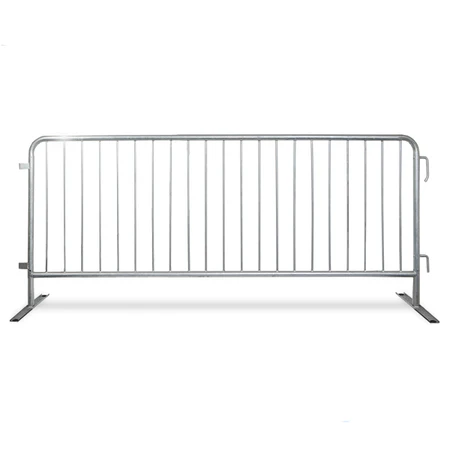

Temporary events often require clear queue lanes, controlled entry points, protected work areas, and visible boundaries, but purchasing a large barrier inventory may not be practical for every organiser. Barricade rental gives event teams, contractors, venues, and public agencies access to crowd-control equipment for a defined period without creating a long-term storage or ownership commitment.
What Does Barricade Rental Usually Involve?
Barricade rental allows an organisation to use crowd-control barriers for a scheduled event, project, or temporary site. The rental period may range from a single day to several weeks, depending on the provider and the customer’s requirements.
Services can differ considerably. Some rental arrangements cover equipment collection and return only, while others may include delivery, placement, removal, and post-event pickup. Accessories such as gates, signs, covers, or transport racks may be available separately.
Before agreeing to a rental, organisers should confirm exactly what is included in the quoted price. Delivery distance, setup labour, collection times, late fees, minimum quantities, and damage charges may affect the final cost.
When Does Renting Make Sense?
Renting can be useful when barriers are needed occasionally rather than throughout the year. A community festival, graduation, sporting event, parade, concert, or temporary construction project may require dozens or hundreds of barriers for a short period.
Purchasing equipment for a single event can create additional responsibilities. The organisation must arrange transport, storage, inspections, cleaning, repairs, and future handling. These costs and duties may not be worthwhile when the barriers will remain unused for most of the year.
Rental may also suit organisers whose needs change from one event to another. A small indoor gathering may need only a few queue barriers, while a city-centre festival may require long perimeter lines, entrance lanes, gates, and restricted-area divisions.
Access to different barrier types can make it easier to match the equipment to each setting.
Common Applications for Rental Barricades
Rental barriers are used in many temporary environments. Event organisers may use them to guide guests through ticket checks, security screening, registration tables, food areas, and venue entrances.
Concerts and festivals often require barriers near stages, backstage access points, merchandise areas, and pedestrian routes. Sporting events may use them around starting lines, finish areas, athlete routes, spectator zones, and sponsor spaces.
Local authorities and community groups may rent barriers for parades, street fairs, public ceremonies, demonstrations, and seasonal celebrations. Contractors may use them to separate pedestrians from short-term work areas, provided the chosen equipment is suitable for the site and intended purpose.
Standard pedestrian barricades are not vehicle-stopping systems. Where vehicle protection is required, organisers should seek equipment designed and rated for that application.
Choosing the Right Barrier Type
The appropriate barrier depends on expected crowd size, location, surface conditions, weather, handling requirements, and the purpose of the boundary.
Steel crowd-control barricades provide a visible, connected line and are often used at larger events. Plastic barriers may be suitable for certain pedestrian routes, temporary work areas, or situations where lower weight and high visibility are priorities.
Important features to review include:
- Barrier height and width
- Foot design
- Connection system
- Gate availability
- Outdoor suitability
- Compatibility with signs or covers
- Storage and transport requirements
Flat feet may reduce trip concerns in busy pedestrian areas, while bridge-style feet may suit other surfaces and layouts. The rental provider should be given accurate information about the ground surface so suitable equipment can be recommended.
Estimating the Number of Barricades Needed
A basic estimate begins with the total length of every planned barrier line. Divide that length by the usable width of each barricade, then account for gates, corners, overlaps, and layout changes.
However, perimeter length is only one consideration. Organisers may also need barriers for queue lanes, entrance channels, ticketing areas, emergency access points, staff zones, delivery routes, and backstage sections.
A site plan can help prevent underordering. Mark every proposed barrier line and identify where controlled openings are required. It is sensible to include additional units for damaged equipment, last-minute route changes, or unexpectedly high attendance.
Overordering slightly may be less disruptive than discovering during setup that an important entrance or restricted area cannot be completed.
Questions to Ask the Rental Provider
A clear conversation with the provider can prevent misunderstandings close to the event date. Ask whether the required quantity and barrier type are available for the full rental period.
Confirm the delivery and pickup windows, especially when the venue has strict loading times. Determine whether the barriers will be dropped at one location or placed according to the site plan.
Other useful questions include:
- Is setup included?
- Who is responsible for unloading?
- Are gates and accessories available?
- What condition will the barriers be in?
- How are missing or damaged units charged?
- Are weekend or after-hours collections available?
- What happens if the event date changes?
- Are additional units available at short notice?
All responsibilities should be documented in the rental agreement.
Safe Installation and Event Use
Every barrier should be inspected before public use. Damaged hooks, bent frames, unstable feet, sharp edges, or cracked plastic sections should be reported and removed from the layout.
Barrier lines should not obstruct emergency exits, fire lanes, accessible routes, or essential staff access. Queue layouts should give visitors enough room to move and should avoid narrow dead ends.
Weather conditions also require attention. Wind can become a greater concern when solid signs, banners, or covers are attached. Any accessories should be fitted correctly and checked throughout the event.
Barricades are one part of crowd management. Clear signs, trained staff, communication procedures, emergency planning, and regular site checks remain necessary.
For organisers who need temporary barriers without the responsibilities of permanent ownership, rental can provide practical access to suitable equipment and support services. Visit Epic Crowd Control to review rental options, available barrier types, service details, and crowd-management equipment for upcoming events or temporary projects.